Course Details
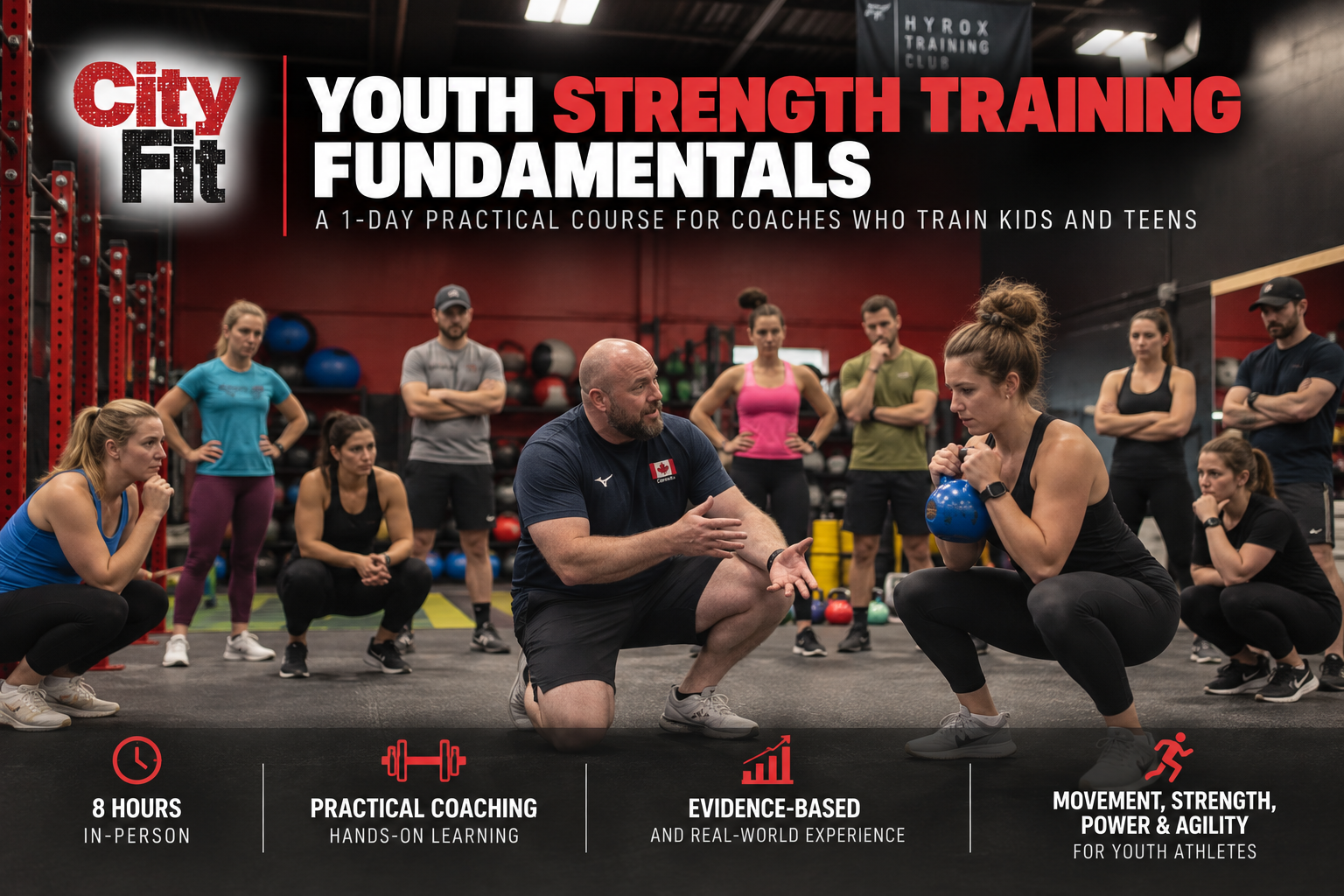
Date: Saturday, October 18
Time: 12:00 pm - 8:00 pm
Location: City Fit Shop , 9938 67 Ave NW, Edmonton, AB, T6E 0P5
Format: In-person practical workshop
Length: 8 hours
Investment: $169.99/person
Team Rate: 3+ coaches (contact for rate)
Capacity: Limited to 15 participants
Who This Course Is For:
This course is designed for anyone responsible for coaching, training, or developing youth athletes.
It is a great fit for:
- Strength and conditioning coaches
- Personal trainers
- Sport coaches
- PE teachers
- Gym owners
- Youth program coaches
- Martial arts coaches
- Athletic therapists
- Physiotherapists
- Chiropractors
- Parents who coach teams
You do not need to be an elite strength coach to attend.
You do need to care about helping kids and teens move better, get stronger, and build confidence safely.
What You Will Learn
By the end of this course, participants will be able to:
1. Understand the Benefits and Risks of Youth Strength Training
- Identify the physical, psychological, and athletic benefits of resistance training for youth.
- Recognize common risks and misconceptions surrounding youth strength training.
- Apply evidence-based safety practices to minimize injury risk.
2. Teach Safe and Effective Movement Mechanics
- Demonstrate proper exercise technique and movement fundamentals.
- Coach youth to maintain optimal form and body awareness during exercise.
- Recognize and correct movement compensations before increasing load.
3. Develop Load Awareness and Exercise Progressions
- Teach youth how to understand and manage resistance safely.
- Progress exercises appropriately based on movement competency, not age alone.
- Implement risk-reduced training strategies that prioritize skill acquisition and long-term development.
4. Understand Youth Growth and Development
- Explain how growth, maturation, and developmental stages influence training.
- Adapt programming considerations based on physical and cognitive development.
- Recognize factors that impact coordination, strength, and movement efficiency during growth phases.
5. Train Power, Agility, and Explosiveness
- Introduce age-appropriate power, speed, and agility training principles.
- Design activities that develop athleticism while maintaining safety and engagement.
- Progress plyometric and explosive exercises based on movement readiness.
6. Coach the Youth Mindset
- Understand the social, emotional, and motivational needs of youth participants.
- Use positive coaching strategies to build confidence, autonomy, and participation.
- Foster a growth mindset and positive relationship with physical activity.
7. Utilize Peer Interaction and Partner-Based Learning
- Incorporate partnered activities to enhance engagement and accountability.
- Create collaborative learning opportunities that improve skill development.
- Manage group dynamics to promote inclusivity, safety, and enjoyment.
What Makes This Course Different
This is a practical coaching course.
You will not just learn what youth strength training should look like. You will practice how to coach it.
The day includes:
- Mini lectures
- Practical demonstrations
- Partner coaching
- Movement observation
- Cueing practice
- Real-time feedback
- Group discussion
- Session design
- Practical application
A lot of the content is rooted in scientific evidence, but the goal is simple:
Help you coach better on Monday.
What You’ll Leave With
Every participant will leave with:
- A clear framework for youth strength training
- Movement progressions for common strength patterns
- Practical cueing and correction strategies
- Load awareness guidelines
- Youth power and agility progressions
- A sample youth session structure
- A better understanding of growth and development
- Tools for coaching confidence, motivation, and group dynamics
- Certificate of completion
About the Instructor
Michael Cook brings experience from both ends of the high-performance sport system, with practical insight into where athletic development begins and where it can lead.
This course combines scientific evidence with real coaching experience, giving participants a clear, practical approach to training youth athletes safely and effectively.
Michael is currently the Director of Performance Sciences and Innovation with Volleyball Canada and had previously spent 7 seasons with the men's indoor program.
Michael has been a strength and conditioning coach for 26 years and has worked at various levels of amateur and professional sports, consulted with various professional sports, lectured at universities, and has mentored various sport science practitioners.
Michael is the current Lead for Practitioner Development with Sport Scientist Canada and is currently pursuing his PhD to better understand the determinants of jumping performance in professional and non-professional volleyball athletes